
If you're a parent today, your child's school experience looks nothing like the one you grew up with.
Classrooms are moving away from memorising facts and completing worksheets for the sake of an exam. They're becoming spaces where children ask questions, solve problems, work with others, and build skills that matter well beyond the classroom.
The National Education Policy (NEP) 2020 is behind that shift. It might sound like just another government policy, but its impact shows up in everyday classrooms and homes. It shapes how children are taught, how progress is measured, and how parents are involved.
Here's what it actually means for you as a parent.
1. Marks Are No Longer the Only Measure of Success
For decades, a report card told you most of what you needed to know. The question was simple: how much did the child memorise?
The question schools are asking now is different: has the child understood the concept, and can they use it?
That means more room for:
● Applying concepts instead of reciting them
● Asking questions that don't have a single "correct" answer
● Getting credit for effort and improvement, not just the final score
Parent tip: Try asking, "What surprised you today?" instead of "How many marks did you get?" You'll learn more about what actually happened in class.
2. Learning Is Becoming More Joyful
Most of us spent school copying notes and memorising definitions for a test. Today's classrooms lean more on discussion, experiments, projects, and hands-on exploration.
The reasoning is straightforward: children who enjoy learning tend to stay curious and take more ownership of it. Learning doesn't have to feel like a chore to be meaningful. Sometimes, the opposite is true.
3. Strong Foundations Matter More Than Speed
A common parent question is: should my child start learning everything as early as possible?
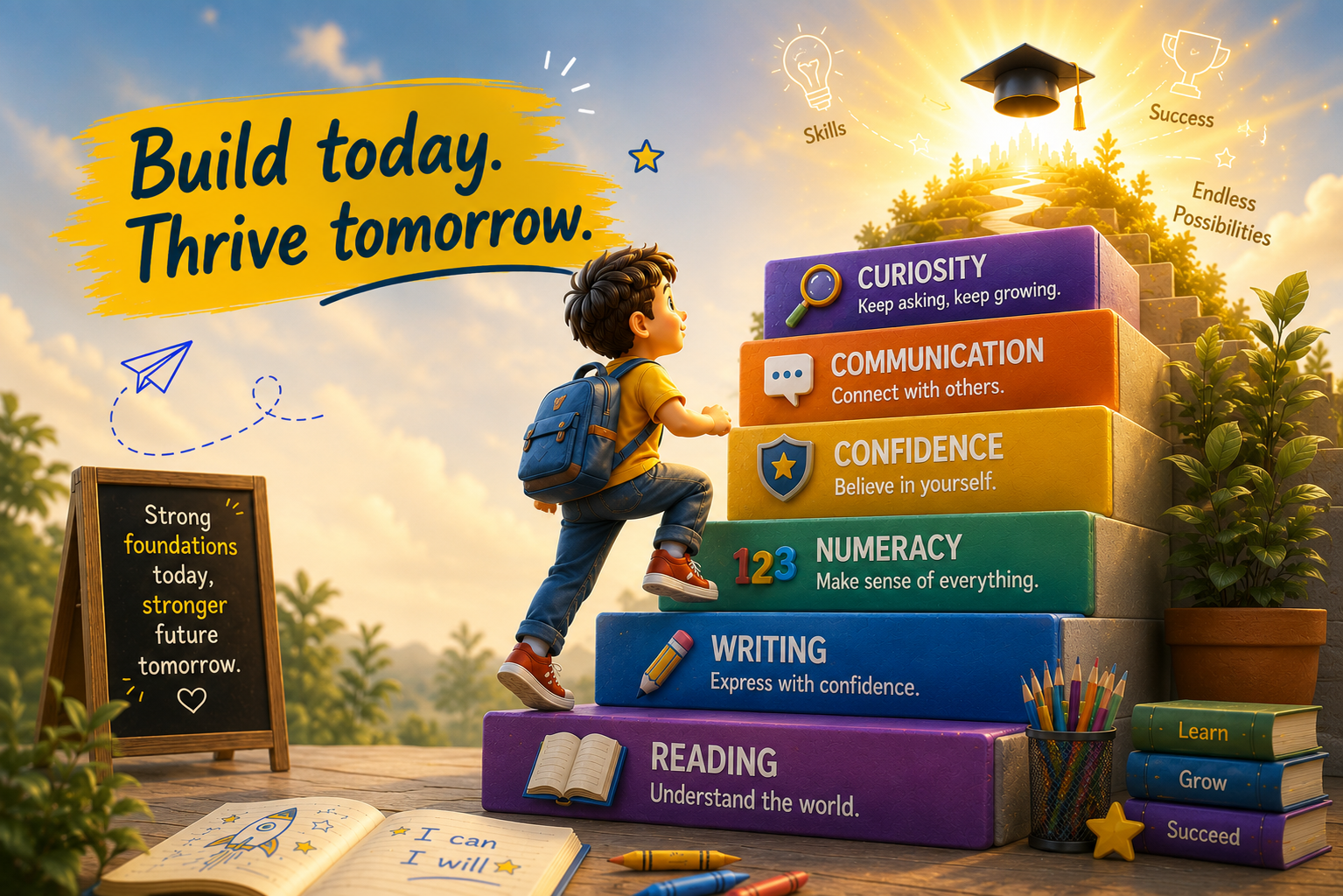
NEP 2020 pushes back on that instinct. It treats strong foundations in reading, writing, numeracy, communication, and social-emotional development as more important than racing through the syllabus. A child who's confident in the basics is in a much better position for everything that comes after.
4. Skills Matter Just as Much as Subjects
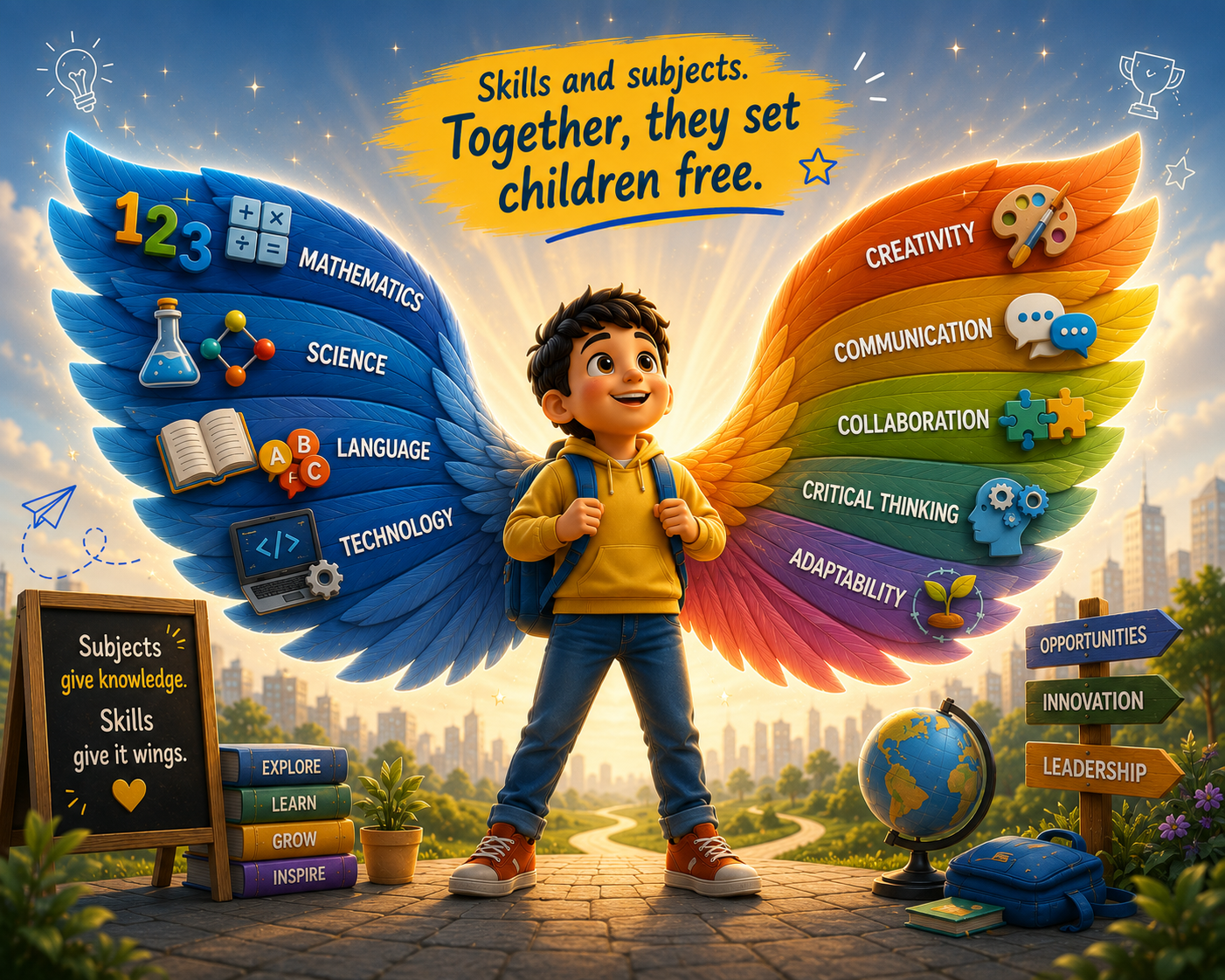
Academic knowledge still matters, but it's no longer the whole picture. Employers and universities increasingly care about whether a student can think independently, communicate clearly, and adapt.
NEP 2020 encourages schools to build these skills alongside subject knowledge.
Communication, creativity, critical thinking, and digital literacy are now treated as core skills, not extras.
Parent tip: Encourage your child to ask "why" more often. It's one of the simplest ways to build curiosity.
5. Parents Are Partners, Not Spectators
Education doesn't stop at the school gate. Parent-teacher meetings are shifting from "Here's your child's score" to fuller conversations about how a child is doing academically, emotionally, and socially.
That shift only works if parents lean in. Ask how your child is growing, not just how they scored.
6. Technology Is a Tool, Not the Teacher
There's a common worry that technology will eventually replace teachers. In practice, it's doing the opposite.
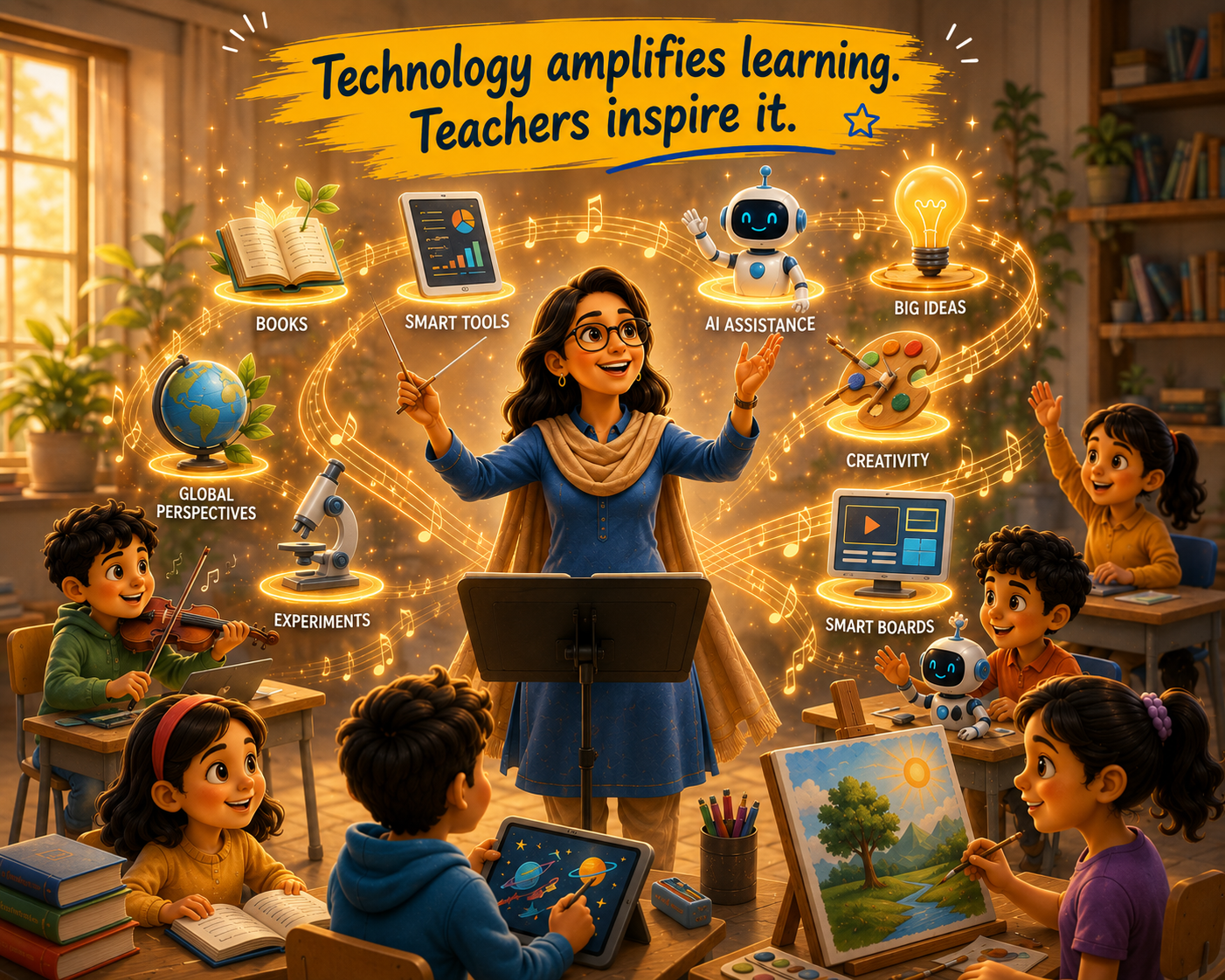
Technology can deliver information instantly. It can't replace the judgment, encouragement, and course correction that a good teacher provides. NEP 2020 encourages schools to use digital tools where they genuinely help, not as a substitute for teaching, but as one more resource alongside it.
Parent tip: When your child uses a learning app, ask, "What did you learn?" rather than "How long were you on it?"
7. Every Child Learns Differently
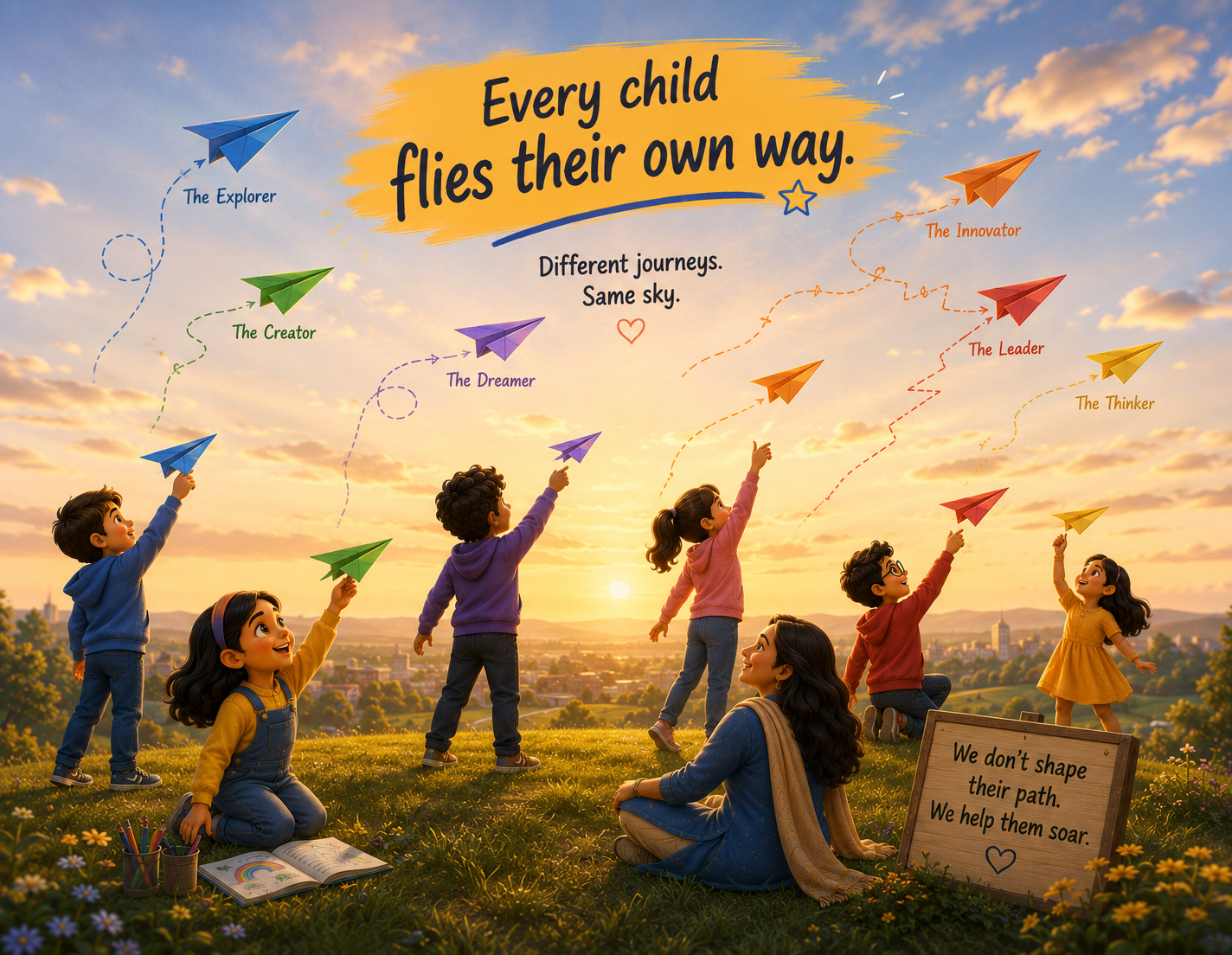
There's no single definition of intelligence. Some children express themselves through language, others through art, science, sports, or leadership. Every child has a different pace and different strengths.
The job of schools and parents isn't to compare children against each other. It's to notice what a specific child is good at and build on it.
A Few Things NEP 2020 Doesn't Mean
"Marks don't matter anymore."
They still do. They're just no longer the only thing that counts. Conceptual understanding and skill-building sit alongside academic performance now, not in place of it.
"Learning has gotten easier."
If anything, it's gotten deeper. Memorising an answer is easier than understanding, applying, and building on it, which is what's now expected.
Why This Matters
NEP 2020 isn't only changing what children learn. It's changing how they learn it, and what school is preparing them for.
That shift only really lands when schools and parents are working from the same page. Not just informed, but involved.
What This Looks Like at AGFS
At AAJ Global Foundation School, this isn't a policy we're reacting to. It's the framework we've been building our classrooms around.
Walk into any classroom here, and you won't find rows of children copying from a board. You'll find students collaborating around tables instead of sitting silently, presenting their own projects with confidence, and using interactive digital boards and AI-enabled tools. Alongside all of this, you'll find teachers facilitating discussions rather than lecturing from the front of the classroom.
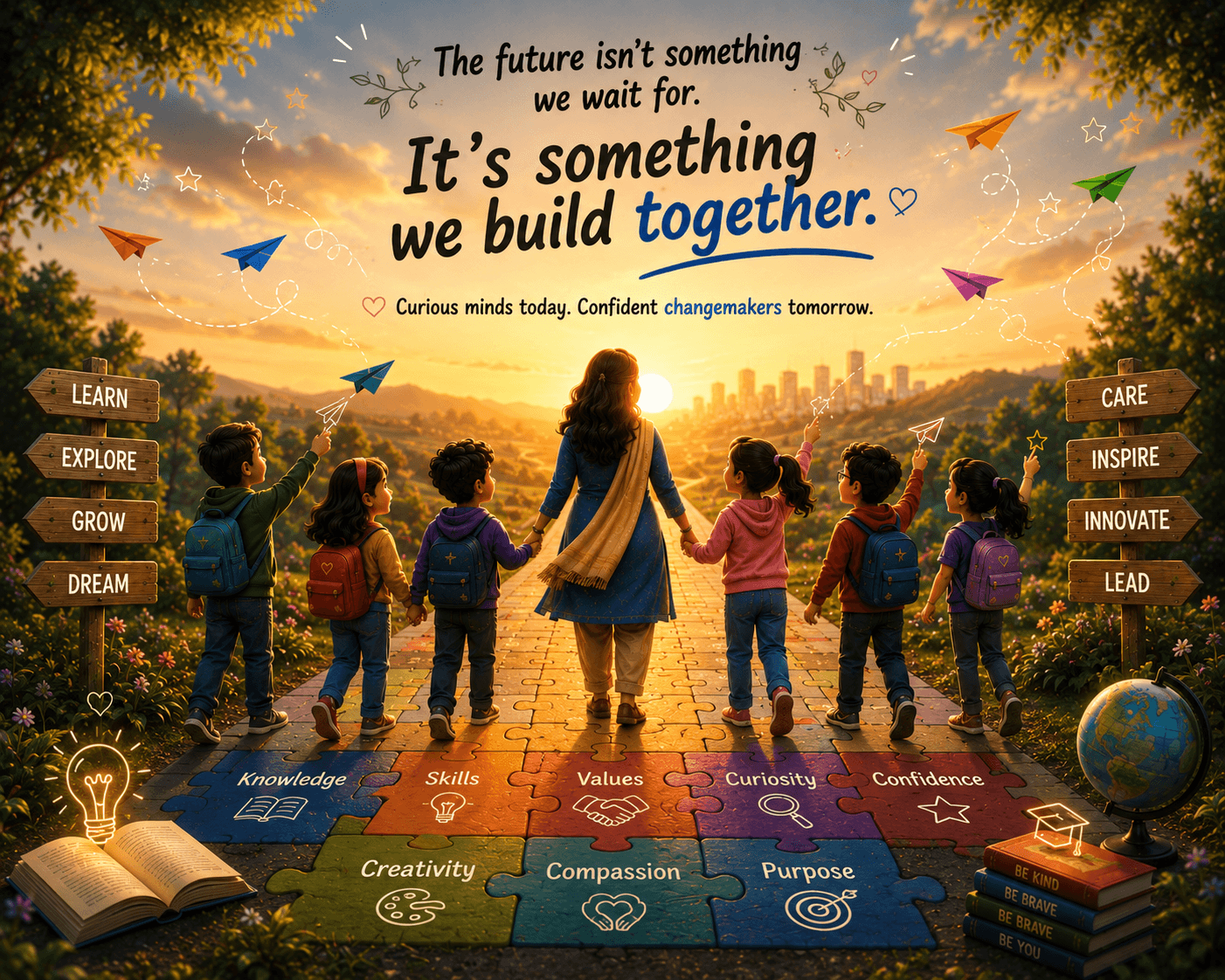
Learning here goes beyond completing chapters. It's built around curiosity, collaboration, and confidence, the very qualities NEP 2020 encourages every school to prioritise.
We don't have NEP fully figured out yet. No school does. It's still early. But we're building toward it with intent: classrooms where curiosity gets room to breathe, teachers come before technology, and parents are treated as partners, not an audience.
If you'd like to see what that actually looks like day to day, come sit in on a class. We'd rather show you than describe it.